CIRM funds many projects seeking to better understand Parkinson’s disease and to translate those discoveries into new therapies.
Description
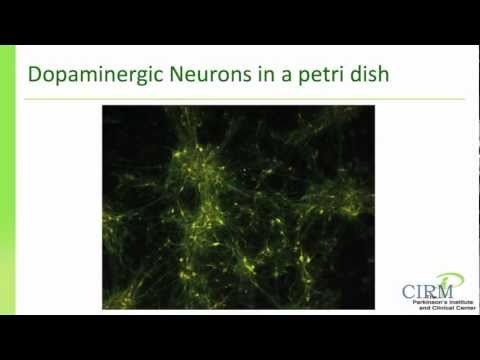
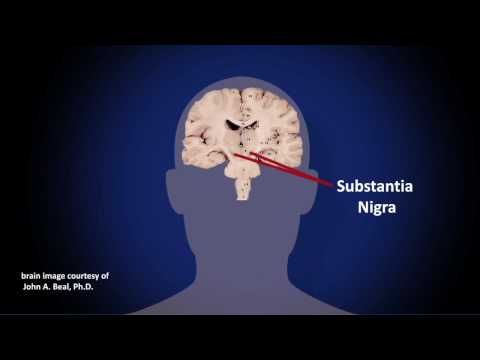
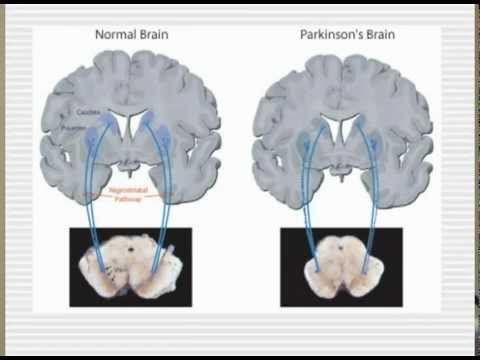
Parkinson’s disease is a neurodegenerative disease that affects approximately a million people in the United States and seven million people around the world. Symptoms include tremors, slow movement, muscle rigidity, balance issues and lack of facial expressions. Parkinson’s disease occurs when the neurons or nerve cells in the portion of the brain that controls movement die off. These neurons send signals by releasing a chemical called dopamine, and are referred to as dopaminergic neurons. No cure exists for the disease and current medications become less effective over time.
Stem cell scientists are taking two general approaches to target Parkinson’s disease. The first approach involves understanding the disease and looking for new drugs to treat it. CIRM grantees have taken skin cells from people with Parkinson’s disease, reprogrammed them back to an embryonic-like state, turning them into the kind of stem cell that can be transformed into any other cell in the body, then coaxing those cells to become dopaminergic neurons that are lost to the disease. Those cells showed signs of the disease in the lab dish, and were distinctly different from the same cells created from healthy people.
CLINICAL STAGE PROGRAMS
Brain Neurotherapy Bio
Dr. Krystof Bankiewiecz and his team are using a gene therapy approach to promote the production of a protein called GDNF, which is best known for its ability to protect dopaminergic neurons, the kind of cell damaged by Parkinson’s Disease. The approach seeks to increase dopamine production in the brain, alleviating PD symptoms and potentially slowing down the disease progress.
Video: Progress and Promise in Developing a Cure for Parkinson’s Disease
Being able to study human Parkinson’s disease cells in a lab dish is a major milestone. Now, scientists can expose those cells to different drugs to find the ones that eliminate signs of the disease. If scientists find drugs that treat the disease in a lab dish, they will then test those same drugs in animal models and develop the most promising into a therapy for people with the disease. Several teams of CIRM-funded researchers are using stem cell techniques to create Parkinson’s disease cells in the lab dish and then screening them for new drugs.
Other groups are creating dopamine-producing cells in the lab dish with the hope that they could replace the neurons that are damaged in people with the disease. See below for a list of a CIRM-funded projects related to Parkinson’s disease.